
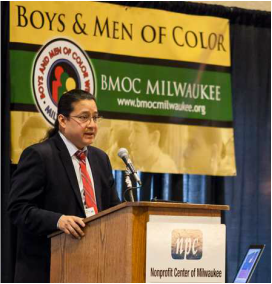
Stay Involved! Watch for workshops, forums and more in 2015 Dr. Ignace was a speaker at the NPC conference "Building Opportunity for Boys and Men of Color" in October, one of the events during the first-ever Boys and Men of Color Week. Workshops and forums in 2015 will keep the momentum going. Watch for details. Help shape a cooperative vision for boys and men of color: The Research Center for Urban Education Leadership Development at UW-Milwaukee is conducting a research project titled Shaping a Cooperative Vision for Boys and Men of Color: A Study of Southeast Wisconsin Organizational Resources and Priorities. Anyone who works for Milwaukee area organizations that provide direct services to youth and families of color is invited to take part in this important survey and receive a site visit. Click here for details. | By Molly Willms, NPC Guest Blogger Running a Native American health center in a city the size of Milwaukee is no mean feat – but when your last assignment covered the entire country, it’s doable. Meet Dr. Lyle Ignace, Executive Director of the Gerald L. Ignace Indian Health Center, whose job entails the duties of a CEO, CFO, CIO and, by the way, medical doctor. He has held the position for one year, before which he held a federal position at the Indian Health Service, a U.S. Department of Health and Human Services agency located in Rockville, Maryland. Named for Dr. Ignace’s father, Gerald, the south side health center provides an array of health and community services for Urban Indians including health checks, chronic care disease management, infant and well-child health care, fitness and nutrition education, programs for youth and seniors, family planning, and behavioral health services. It is this last program – little more than three months old – that Ignace says addresses the greatest challenge and opportunity for boys and men of color. “There’s depression, anxiety, and other mental health disparities, just like in any other community, it’s there,” Ignace said. “I think for an urban setting like Milwaukee, there wasn’t a place where Native youth could go that would be culturally appropriate, or a response that would meet their needs.” The mental health issues faced by boys and men of color may arise from disproportionately witnessing violence or having limited opportunities presented in educational and employment institutions, which are not always equipped to provide for the needs of Native people, Ignace said. “I think living in an urban setting, that presents social challenges and a high level of psychosocial need, it can have an impact on behavior and affect how individuals cope, on social norms, on interpersonal dynamics,” Ignace said. Enter the Indian Health Center, which provides consistent, culturally-appropriate support for Native people of all ages for the first time in Milwaukee. “So now we have that, and offer assistance and a program that will help address more of those gaps in services that have never been provided or available before,” Ignace said. The programs offered include drumming and beading circles, outpatient therapy, alcohol and substance abuse support groups and a host of talking circles for women, veterans, and the general populace. The expanded offerings are still in their fledgling stage, and Ignace said couples and family therapy might be joining the mix in the future. Providing the services, Ignace said, is an essential component of the center’s mission: “To improve the health, peace, and welfare of Milwaukee's urban Indian community.” ______________ Photo courtesy Scott Witte Photography |
|
0 Comments
|
Categories
All
Archives
August 2017
|
 RSS Feed


